Beyond the API Graveyard: Architecting Solo AI Products for Platform-Proof Longevity
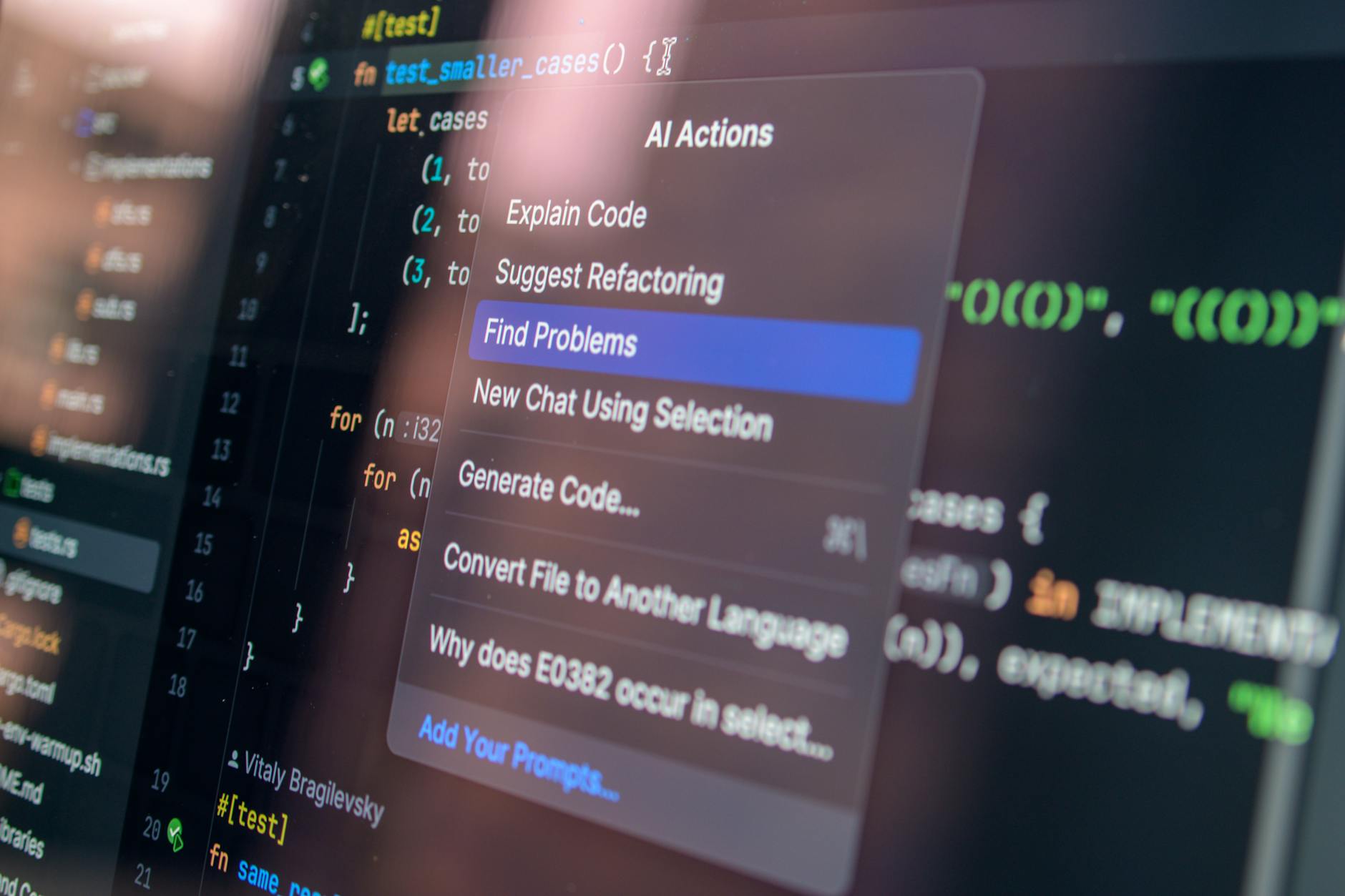
Photo by Daniil Komov via Pexels
Published on Alfo Tech Industries Blog · by Alfo Tech Industries · October 1, 2026
You've built something cool with a cutting-edge AI model. It works. Users like it. Then, a few months later, the rug gets pulled. The API changes, the model gets deprecated, or the pricing structure suddenly goes sideways. Sound familiar? For solo founders deeply invested in AI products, this isn't just a nuisance; it's an existential threat. The current pace of AI API evolution means relying solely on a single external provider is akin to building your house on quicksand. True AI platform resilience demands a proactive stance, deliberately engineered defenses against the inevitable shifts of the underlying landscape. We can't wish away API volatility, but we can architect around it.
In this article:
- The Shifting Sands of AI APIs: A Constant Migration
- Your Application's Shield: Abstraction Layers and AI Gateways
- Diversify or Die: Multi-Provider Strategies and Open-Source Power
- Strategic Fortifications: Beyond Code-Level Tactics
- The Real Talk: Costs and Trade-offs for the Solo Founder
The Shifting Sands of AI APIs: A Constant Migration
The shelf life of an AI model is astonishingly short compared to traditional software components. We're often talking 6 to 12 months before a major update or, more critically, an announced deprecation. OpenAI, for example, maintains a consistent deprecation schedule. Models like `whisper-1` and `gpt-4o-transcribe` have planned shutdowns, and even parts of the Assistants API are slated for retirement by late 2026 or early 2027, as outlined on their developer pages. They typically give six months' notice for generally available models. That’s not a lot of runway when you're a lean operation.
It's not just OpenAI. Other cloud giants are also streamlining, which means previously promising services vanish. AWS, for instance, shifted about 20 services, including Amazon Kendra, Q Business, and Bedrock Agents, into 'maintenance mode' recently. This move halts new sign-ups and signals a pivot to broader, agent-centric successors, as noted by sources like Aiweekly.co and Forbes.com. Some of these were launched only late last year. Google Cloud's `gemini-2.5-flash-lite-preview-09-2025` model also has an expiration date. This constant churn demands more than just patching; it requires fundamental architectural choices that anticipate change, not just react to it.
Your Application's Shield: Abstraction Layers and AI Gateways
The most fundamental defense against volatile AI APIs is abstraction. Think of an API abstraction layer as a universal translator between your product's core logic and the bewildering array of backend AI services. When your application requests a task, this layer translates it into the specific dialect and format required by, say, OpenAI, Anthropic, or Google Gemini. If OpenAI changes its completion endpoint, only the OpenAI adapter within your abstraction layer needs an update, not your entire application.
Dedicated AI model gateways, like those offered by KongHQ or solutions from Truefoundry, take this concept further. They provide a single, consistent API for your application to hit, routing requests intelligently to various providers. This decoupling is non-negotiable for solo founders. It isolates you from the chaos, transforming potential product-breaking changes into manageable, localized refactors within your gateway layer. Your application remains blissfully unaware of the underlying vendor's drama.
Diversify or Die: Multi-Provider Strategies and Open-Source Power
Placing all your bets on one AI provider is a gamble you cannot afford. A multi-provider strategy isn't about hedging; it's about competitive advantage and risk mitigation. One provider might ace reasoning tasks, another offers superior multimodal capabilities, and a third boasts unmatched inference speed. Integrating multiple vendors, often facilitated by the same AI gateways mentioned earlier, lets you tap into the best of breed without re-architecting your app every time you need a new capability or face a deprecation.
Beyond proprietary APIs, the open-source AI ecosystem has matured dramatically. Models from Hugging Face, Llama, and Gemma now rival commercial options for many use cases. For solo founders, this means full control. Host it yourself, or use an open-source LLM API provider. You eliminate vendor lock-in entirely, gain deeper control over fine-tuning, and potentially slash long-term unit costs, especially at scale – think over 400-500k monthly predictions, where the economics often tilt heavily towards open-source, according to sources like Yotta Labs. It's a strategic move towards true self-reliance.
Strategic Fortifications: Beyond Code-Level Tactics
Building an AI product with robust AI platform resilience requires more than just clever coding. You need operational strategies too. First, set up proactive monitoring and alerting for all integrated AI models and APIs. Don't wait for your users to tell you something broke. Automated alerts when models transition to 'legacy' or 'deprecated' states give you precious lead time for migration planning, as platforms like OpenAI provide explicit timelines.
Treat your prompts like critical code assets. Version control them. Track changes, understand performance deltas, and ensure reproducibility. Designing with explicit fallback chains is another essential layer of defense; every primary AI model should have a configured secondary or tertiary model/provider. If the primary fails or is too slow, gracefully degrade or switch. Finally, prioritize open standards for data. Use JSON, Parquet, and adhere to open API conventions. This makes migrating data, prompts, and embeddings between providers dramatically less painful.
The Real Talk: Costs and Trade-offs for the Solo Founder
Let's be blunt: multi-provider and abstraction strategies aren't free. They introduce complexity and, often, upfront costs. You might incur duplicate licensing fees for management platforms, or spend more engineering time maintaining expertise across diverse providers. Even egress charges for data transfer between clouds can become a factor. For solo founders with tight budgets and limited time, the overhead of a full multi-cloud strategy might, initially, seem daunting. As Cloudzero.com highlights, organizations with lower cloud spend (below $500K/year) sometimes find the benefits of resilience are outweighed by the immediate complexity and cost.
But here's my take: this isn't about blindly adopting every best practice from enterprise. It's about surgical, calculated choices. The complexity is often mitigated by specialized AI gateways and orchestration tools available today. For a solo founder, the ability to pivot swiftly, to remain in control of your core product's features despite external platform turbulence, is arguably your biggest competitive advantage. Avoiding catastrophic downtime or a complete rewrite down the line often justifies the early investment in these architectural patterns. It's not a luxury; it's survival.
Conclusion
The API graveyard is real, and it's full of good ideas that withered due to external platform shifts. For solo founders, building an AI product means playing a long game. That demands a deliberate, even aggressive, approach to architecture. Embracing abstraction layers, diversifying your AI providers, leveraging the power of open-source models, and adopting smart operational practices aren't just 'nice-to-haves.' They are essential components of your product's survival kit. You have to build with an eye to the inevitable changes, proactively shoring up your defenses. It’s the only way to ensure your product thrives, no matter what tectonic plates shift beneath the AI landscape.
FAQs
Is an AI model gateway necessary for a solo founder?
Not strictly from day one, but it quickly becomes a powerful asset. For a brand-new MVP, direct API calls might be fine to prove a concept. However, as soon as you have paying users or consider integrating a second model, an abstraction layer or gateway minimizes future refactoring pain and bolsters your AI platform resilience significantly.
How much more expensive is a multi-provider strategy?
It can be, but not always in the way you might expect. While direct provider costs might be competitive, the 'extra' expense often comes from engineering time to integrate and maintain multiple APIs, plus potential egress fees. However, by leveraging competition and best-fit models, you can often optimize for both performance and cost across providers in the long run.
When should I consider switching to open-source models?
Consider open-source as soon as you hit a critical usage threshold where proprietary API costs become a significant burden, or if you need highly specialized fine-tuning. If your inference volume exceeds 400-500k predictions monthly, the cost-benefit analysis often swings heavily towards self-hosting or using open-source model providers, giving you superior control and predictability.
What's the easiest way to start with an abstraction layer?
Start with a simple internal wrapper around your API calls. Don't build a full-blown gateway immediately. As your needs grow, you can then graduate to off-the-shelf AI gateways or more sophisticated orchestration libraries that handle routing, caching, and fallbacks for you, incrementally increasing your AI platform resilience.
Sources & Further Reading
- predictabledialogs.com
- cloudzero.com
- truefoundry.com
- itea.org
- eliassen.com
- konghq.com
- aws.com
- openai.com
- openai.com
- aiweekly.co
- forbes.com
- amazon.com
- google.dev
- jumpcloud.com
- avahi.ai
- nhimg.org
- medium.com
- yottalabs.ai
- siliconflow.com
- askelixir.ai
- localchat.app
- github.com
- towardsai.net
- nutanix.com
- cloudcalcep.com
- cloudzero.com
- infracost.io
- entrepreneur.com
Alfo Tech Industries Blog — Alfo Tech Industries Blog is published by Alfo Tech Industries, an AI‑native, founder‑focused product ecosystem building automation, AI tooling, and technical systems for independent creators and small teams.

Comments
Post a Comment