The Solo Founder's Playbook for Robust AI Testing: Navigating Non-Deterministic Systems
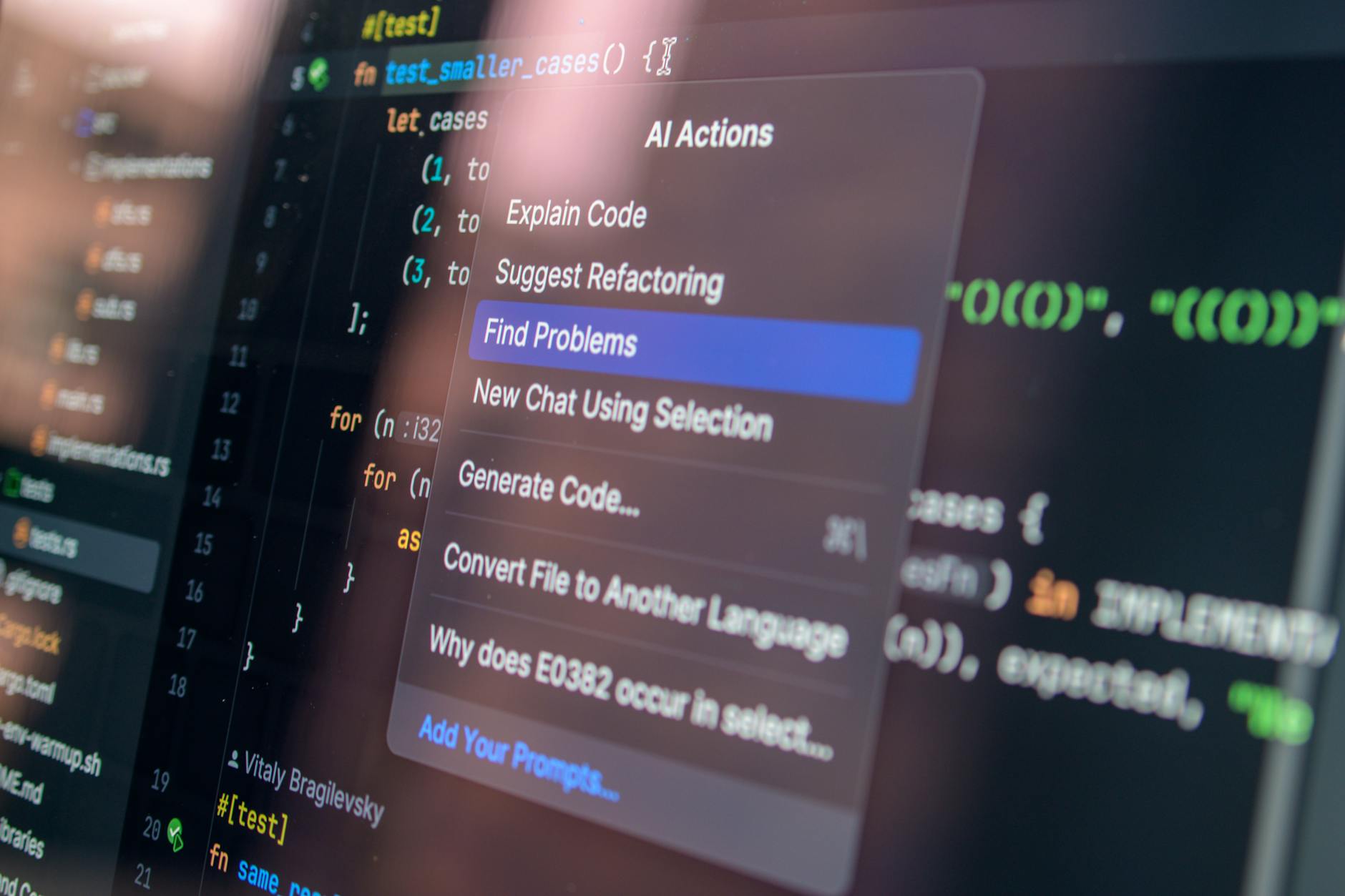
Photo by Daniil Komov via Pexels
Published on Alfo Tech Industries Blog · by Alfo Tech Industries · September 18, 2026
The promise of AI for a solo founder is immense, offering the ability to build sophisticated applications with unprecedented speed. But the reality? It's a minefield of non-deterministic chaos if you don't nail your testing strategy. Traditional software testing, built on the bedrock of predictable inputs yielding identical outputs, simply collapses when confronted with the inherent variability of AI models, especially Large Language Models (LLMs). For any solo founder serious about avoiding the dreaded 'silent corruption' and making sure their AI product actually works reliably, understanding and implementing practical, lightweight strategies for robust AI testing for solo founders is non-negotiable. Forget the enterprise-scale MLOps; we're talking about smart, high-leverage approaches tailored for lean operations.
In this article:
- Data Validation: The Bedrock of AI Reliability
- Adapting Unit Tests for AI: Beyond Binary Pass/Fail
- Connecting the Pieces: Focused Integration Testing
- End-to-End Testing with AI-Powered Assistance
- Beyond Deployment: Continuous Monitoring and Observability
Data Validation: The Bedrock of AI Reliability
Before any model even sees a byte of data, you must establish robust data validation. This isn't optional; it's foundational. Many AI project failures trace back to poor data quality, a preventable catastrophe that no solo founder can afford. Implement automated checks within your ingestion pipelines to catch schema mismatches, null values, out-of-range data, or unexpected statistical shifts. Think about it: if garbage goes in, garbage will inevitably come out, often in subtle, hard-to-debug ways. Google Research consistently emphasizes the profound benefits of rigorous data validation, highlighting its role in early error detection and overall model quality. Your data pipeline needs its own set of tests, treating incoming data with the same scrutiny you'd apply to your code. This upfront investment saves exponentially more pain down the line.
Adapting Unit Tests for AI: Beyond Binary Pass/Fail
For the deterministic parts of your AI application – loading API keys, parsing user inputs, validating forms – traditional unit tests remain invaluable. Use them. But when it comes to the AI model's output itself, you must shift your mindset from binary pass/fail assertions to 'evaluations' (evals). AI, particularly generative models, often produces different yet perfectly valid outputs for the same input. This non-determinism is a feature, not a bug, but it breaks standard unit testing. Instead, focus on 'probabilistic testing' over multiple runs. Assert what must be true about the output's structure or key content using invariant and property-based assertions. For generative AI, ditch exact string matches and embrace semantic similarity measures to score outputs. Crucially, don't rely on a single execution. Sample `N` runs and measure a pass rate against a defined threshold. A powerful, resource-light technique for generative AI is 'LLM-as-a-Judge,' using another LLM to score your model's output against a rubric. This method, contrary to common belief, can provide scalable, objective evaluation where human review isn't feasible.
Connecting the Pieces: Focused Integration Testing
Your AI model rarely lives in isolation; it integrates with databases, APIs, user interfaces, and other services. Integration testing verifies these crucial interactions. For solo founders, the key is focused, lean tests that confirm the handshake between components. Don't try to replicate your entire production environment. Instead, mock external dependencies where feasible, isolating the system under test to just a few interacting parts. Containerization, particularly Docker, becomes your best friend here, ensuring consistent testing environments across different stages of development. Automated integration tests, run as part of your Continuous Integration/Continuous Deployment (CI/CD) pipeline, catch communication breakdowns early. This practice dramatically reduces the risk of 'it works on my machine' scenarios and catches integration issues before they compound into bigger problems in production.
End-to-End Testing with AI-Powered Assistance
End-to-end (E2E) tests validate critical user workflows across your entire application stack, from front-end input to AI processing and back to user output. Traditionally, E2E tests are notorious for being brittle and high-maintenance, a massive drain on solo founder resources. Here's where modern AI-powered E2E testing tools become a genuine game-changer. Solutions like Testrigor, Autify, or VirtuosoQA use AI to automate test creation, execution, and maintenance. They can interpret natural language instructions, visually interact with your application, and even 'self-heal' by adapting to minor UI changes. This drastically cuts down on the maintenance overhead that traditionally plagues E2E suites. While a traditional team of ten might spend 60-80% of their time maintaining E2E tests, these AI-powered tools enable a small team (or a solo founder) to achieve 200% more coverage with only 10-15% of the maintenance effort. It's an investment that pays dividends in confidence and stability.
Beyond Deployment: Continuous Monitoring and Observability
Deploying your AI is not the finish line; it's the start of the marathon. AI models, unlike traditional software, degrade silently over time due to 'model drift' – changes in input data distribution (data drift) or the underlying relationships between inputs and outputs (concept drift). Continuous monitoring is essential to catch this silent corruption before it impacts your users. Lean MLOps means focusing on specific, business-impacting metrics alongside standard ML metrics like latency and error rates. Tools like MLflow, Deepchecks, Evidently AI, or WhyLabs offer invaluable capabilities for tracking experiments, versioning models, and detecting drift. Set up targeted alerts for anomalous behavior, avoiding alert fatigue by focusing only on the signals that truly matter. Proactive observation is your last line of defense against AI models quietly going rogue.
Conclusion
The age of the solo founder building sophisticated AI is upon us, but with great power comes the absolute necessity of robust testing. You don't need a massive team or an over-engineered MLOps stack. You need a pragmatic, lean approach that understands the unique challenges of non-deterministic systems. Prioritize data validation, adapt your unit tests to embrace probabilistic outcomes, ensure your components talk correctly through integration tests, and leverage AI to help with E2E validation. Most importantly, stay vigilant with continuous monitoring once your product is live. Building reliable AI is not about eliminating all risk, but about strategically managing it, ensuring your innovations truly deliver value without unexpected, costly surprises.
FAQs
How can a solo founder afford these AI testing tools?
Many AI testing platforms offer free tiers or affordable startup plans. Focus on tools that provide high leverage through automation, like AI-powered E2E testing, which significantly reduces manual effort and long-term maintenance costs, making them a net gain despite upfront fees.
What if my AI model is highly non-deterministic and 'LLM-as-a-Judge' is still too complex?
Start with simpler 'evals.' Focus on invariant checks first: ensure the output is always JSON if it's supposed to be, or that specific keywords are present. Then, move to sampling multiple runs and setting a baseline pass rate for acceptable behavior, rather than seeking perfection.
How often should I run these tests as a solo founder?
Integrate data validation, unit, and integration tests into your CI/CD pipeline for every code commit. Run E2E tests daily or before major releases. For monitoring, it's continuous, with alerts notifying you of significant deviations rather than constant manual checks.
Is it possible to achieve 100% test coverage for AI systems?
No. Given the non-deterministic nature of AI and the complexity of real-world data, striving for 100% coverage is a fool's errand. Focus on achieving sufficient coverage for critical paths, robust data validation, and continuous monitoring to catch issues in production.
Sources & Further Reading
- medium.com
- nobodystudios.com
- kili-technology.com
- medium.com
- redwerk.com
- raftlabs.com
- guild.ai
- dev.to
- medium.com
- guild.ai
- medium.com
- getautonoma.com
- censinet.com
- insightfinder.com
- worldaiexpo.io
- medium.com
- wherescape.com
- research.google
- testrigor.com
- mammothclub.com
- kig.re
- mavai.org
- mlflow.org
- frugaltesting.com
- virtuosoqa.com
- autify.com
- tricentis.com
- nucamp.co
- missioncloud.com
- azilen.com
- fulcrumdigital.com
- dagshub.com
- testmuai.com
- nxcode.io
Alfo Tech Industries Blog — Alfo Tech Industries Blog is published by Alfo Tech Industries, an AI‑native, founder‑focused product ecosystem building automation, AI tooling, and technical systems for independent creators and small teams.

Comments
Post a Comment