Product Powerhouse: AI User Feedback Analysis for Solo Founders
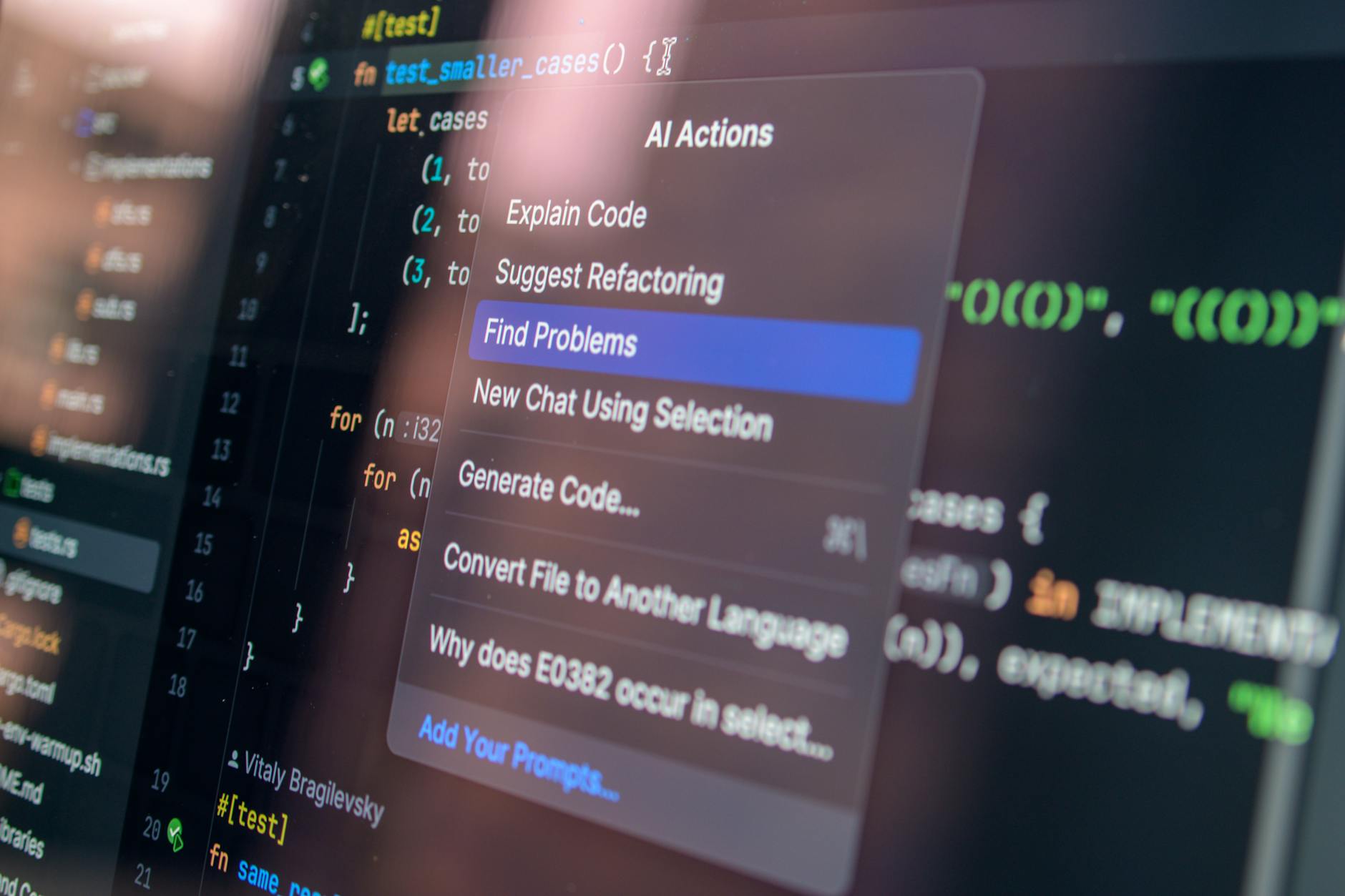
Photo by Daniil Komov via Pexels
Published on Alfo Tech Industries Blog · by Alfo Tech Industries · September 20, 2026
Look, as a solo founder, your time is finite, a precious commodity. Every minute spent manually sifting through app store reviews, support emails, or social media comments feels like a minute not building, not coding, not refining your core product. That overwhelming pile of unstructured customer feedback isn't just noise; it’s a goldmine of critical product insights, if you can only dig it out efficiently and consistently. This isn't about throwing bodies at the problem, something you likely can't afford anyway. This is about leveraging smart automation to do the heavy lifting. Mastering AI user feedback analysis is your unfair advantage; it lets you swiftly prioritize features, precisely identify recurring pain points, and truly understand your users' needs and desires, all without the prohibitive cost of hiring a dedicated data science or analytics team.
In this article:
- The Drowning Pool of Data: Why Manual Feedback Fails
- Beyond Stars and Likes: The Sharp Edge of Modern AI User Feedback Analysis
- Engineering Your AI Feedback Pipeline: A Solo Founder's Blueprint
- The ROI is Real: Measurable Gains for Your Product
- Navigating the Potholes: Where AI Still Needs Human Hand-Holding
The Drowning Pool of Data: Why Manual Feedback Fails
Before the age of advanced AI, handling the sheer volume of customer feedback was a brutal, soul-crushing chore. App store reviews, NPS survey comments, support tickets piling up endlessly, social media mentions—it quickly becomes an unmanageable deluge. For a solo founder, this isn't just inefficient; it's genuinely paralyzing. You're constantly playing catch-up, feeling overwhelmed by the sheer volume. Trying to manually extract meaningful, actionable patterns from thousands of diverse inputs is a fast track to burnout and, more importantly, severely missed opportunities. You're attempting to spot tiny, critical needles in a vast, constantly growing haystack, and the 'needle' of user sentiment keeps shifting. Moreover, human bias inevitably creeps in; your interpretations become subjective, colored by your own assumptions or recent interactions. Frankly, this manual approach is utterly unscalable. You desperately need a system that operates 24/7, doesn't suffer from fatigue, and remains objective, unburdened by the emotional weight of individual complaints. This isn't just about 'reading' what customers say; it's about understanding and synthesizing that information at a scale and speed a single human brain simply isn't wired for. The old way means perpetually reacting slowly to widespread complaints, rather than proactively identifying and solving core issues before they escalate.
Beyond Stars and Likes: The Sharp Edge of Modern AI User Feedback Analysis
Forget basic sentiment analysis, the kind that just tells you 'positive,' 'negative,' or 'neutral.' That's simply table stakes now, barely scraping the surface of what's possible. Modern AI, particularly when powered by sophisticated Natural Language Processing (NLP) techniques and advanced Large Language Models (LLMs) like OpenAI's GPT-4, delves far deeper. We're talking about capabilities such as aspect-based sentiment analysis, which precisely pinpoints specific features people love or, crucially, actively dislike. Instead of a vague 'review is negative,' you get granular detail: 'The onboarding flow is clunky, causing frustration (negative sentiment).' You gain the power to instantly identify recurring topics across hundreds or thousands of inputs, extract underlying emotions users express, and swiftly summarize huge volumes of text into digestible, actionable insights. This advanced understanding allows you to spot emerging trends before they ignite into critical product fires, shifting your development strategy from reactive problem-solving to proactive, user-driven product shaping. Tools like Google Cloud's Customer Experience (CX) Insights or even general-purpose platforms leveraging AWS Bedrock aren't just for massive enterprises; their underlying APIs and models are potent tools solo founders can absolutely wield. Companies like Mattel, for example, leverage Google Cloud's AI capabilities to analyze millions of customer interactions in mere seconds. This level of precision is exactly what you need to ensure every development sprint is truly impactful and aligns with your users' deepest needs.
Engineering Your AI Feedback Pipeline: A Solo Founder's Blueprint
So, the million-dollar question: how do you actually build and maintain this sophisticated system without an entire army of data scientists and engineers? It fundamentally starts with ingestion—getting all your feedback into one place. Aggregate data from all your disparate channels: leverage app store APIs for reviews, pull support tickets from Zendesk or your chosen helpdesk, scrape relevant social media mentions using specialized tools, and gather responses from your NPS surveys. Many of these sources can be piped into a central data store or directly into AI services using tools like Zapier. Next, preprocess this raw, often messy data—clean it, remove noise, and normalize it for consistency. Then, the AI magic truly begins. For sophisticated topic modeling and summarization, you can pipe this prepared data directly into OpenAI's API. A simple prompt like, 'Analyze the following customer feedback. Identify the top 5 recurring pain points, categorize them, and summarize common themes,' can yield powerful results. For granular sentiment analysis on specific product attributes, prompt for aspect-based analysis: 'Extract sentiment specifically about the 'checkout process' and 'search functionality' from these reviews.' AWS Comprehend or Google Cloud Natural Language also offer robust, ready-to-use APIs for direct sentiment detection and entity extraction. The output from your AI needs structured storage—a simple database, a well-organized spreadsheet, or even a flexible tool like AirTable works wonders. Finally, visualize it. Create straightforward dashboards displaying trend lines of positive/negative sentiment for your key features, or a dynamic 'pain point' tag cloud. This entire loop, from raw text input to actionable insight, can be heavily automated, fundamentally freeing you to build and innovate rather than endlessly interpret.
The ROI is Real: Measurable Gains for Your Product
This isn't just theoretical; the return on investment (ROI) for intelligent feedback analysis is stark and quantifiable. Organizations aggressively utilizing AI in their operations accelerate product development by a staggering 40%, according to McKinsey's 2023 report. Think about that for a moment: 40% faster from concept to launch. A pivotal Harvard Business School study further illustrates this impact, finding that AI improves task output by 25% and elevates quality by an impressive 40%. The cost of inaction is immense too; poor customer service costs businesses an estimated $3.7 trillion annually. AI-powered solutions, such as intelligent chatbots and AI customer service agents like Intercom Fin, dramatically mitigate this drain, handling up to 80% of routine customer queries, effectively deflecting noise and escalating only the truly complex, high-priority issues to you. Beyond raw cost savings, AI-driven sentiment analysis directly boosts customer satisfaction by 20% and slashes response times by 15%, creating a more positive user experience. Most importantly for sustainable growth, actively linking your sentiment analysis insights to concrete product changes can bump customer retention by a significant 25%. These aren't minor improvements; they translate directly into tangible bottom-line growth, extended runway, and a crucial competitive edge for any solo venture fighting for market traction.
Navigating the Potholes: Where AI Still Needs Human Hand-Holding
As powerful as AI is, make no mistake: it is not a silver bullet. You, the solo founder, still need to be a relentlessly critical thinker and maintain oversight. First and foremost, remember the fundamental principle: 'garbage in, garbage out.' If your raw data is messy, incomplete, or carries inherent biases, your AI-generated insights will inevitably be flawed, potentially leading you astray. MIT Technology Review starkly warns that AI systems, if not carefully monitored, can amplify existing biases by as much as 40%. Therefore, diligently curate and cleanse your training data. Second, AI often struggles mightily with the subtleties and nuances of human language. Sarcasm, irony, colloquialisms, and deeply embedded cultural slang can easily baffle even the most advanced Large Language Models. A customer might write, 'Oh, brilliant, another bug fix that breaks two other things!' An AI, without careful tuning, could easily misclassify that as positive sentiment if it only registers 'brilliant' and 'fix.' Human oversight isn't merely optional; it’s an absolute requirement to validate and accurately interpret AI outputs, especially when navigating complex emotional contexts or ambiguous phrasing. Gartner wisely predicts a 30% higher success rate for product launches when organizations effectively combine AI-driven insights with traditional, human-led customer feedback methods. AI serves as a truly powerful assistant, yes, but it is not, and never will be, a complete replacement for your strategic brain and nuanced human judgment.
Conclusion
For solo founders, the traditional, formidable hurdles of customer feedback analysis are finally crumbling under the relentless march of AI. These powerful tools effectively collapse what once definitively required an entire, expensive team, empowering you to move with surprising speed and agility. You now possess the means to transform that overwhelming cacophony of customer noise into crystal-clear, actionable product intelligence. Don't simply passively collect feedback; instead, intelligently leverage every single piece of it. Building these robust pipelines isn't about magical black boxes or relying on blind faith; it's about smart engineering, developing a clear understanding of the tools at your disposal, and crucially, maintaining a critical, discerning human eye on the outputs. Your product's long-term future and success fundamentally depend on truly listening to your users. AI simply makes you an infinitely more effective, efficient, and proactive listener.
FAQs
What's the cheapest way for a solo founder to start with AI feedback analysis?
Start with off-the-shelf APIs. OpenAI's API, Google Cloud Natural Language, or AWS Comprehend offer pay-as-you-go models. Focus on a single feedback source initially, like app reviews, to minimize complexity and cost while maximizing early learnings.
How do I handle sarcastic or ironic feedback that AI might misunderstand?
No AI is perfect at nuance. Implement a human review step for a small percentage of flagged ambiguous feedback. Over time, you can fine-tune your prompts or even build custom models (if feasible) by providing specific examples of sarcasm relevant to your product.
Can AI really generate feature ideas from feedback?
Yes, it absolutely can. Prompt an LLM with summaries of recurring user complaints or feature requests, and ask it to brainstorm solutions or identify common themes that strongly suggest new features. It won't build the feature, but it will surface ideas you might otherwise miss entirely.
How frequently should I run my AI feedback analysis pipeline?
It depends heavily on your feedback volume. For active products receiving daily input, weekly or bi-weekly runs are a solid starting point to catch emerging trends. For products with less frequent feedback, a monthly analysis might suffice. The goal is timely insights without overwhelming your limited resources.
What if the AI gives me conflicting or confusing insights?
This is precisely where human judgment shines through. Conflicting insights often point to deeper, unstated user needs or highlight differing sentiments across various user segments. Use these as clear prompts for deeper qualitative research, such as direct user interviews, to unpack the underlying 'why' behind the data.
Sources & Further Reading
- glean.com
- switas.com
- yotpo.com
- nih.gov
- wonderflow.ai
- scitepress.org
- mdpi.com
- uservoice.com
- bland.ai
- google.com
- google.com
- google.com
- google.com
- signitysolutions.com
- medium.com
- startupstash.com
- bensbites.com
- openai.com
- amazon.com
- amazon.com
- aws.com
- zendesk.com
- execsintheknow.com
- fi.co
- storyflow.so
- myaskai.com
- airfocus.com
- usepainboard.com
- engagementhub.com.au
- statsig.com
- gleap.io
- medium.com
Alfo Tech Industries Blog — Alfo Tech Industries Blog is published by Alfo Tech Industries, an AI‑native, founder‑focused product ecosystem building automation, AI tooling, and technical systems for independent creators and small teams.

Comments
Post a Comment