Architecting Your Niche AI Assistant: A Solo Founder's Guide to Deep Specialization and Lean Deployment
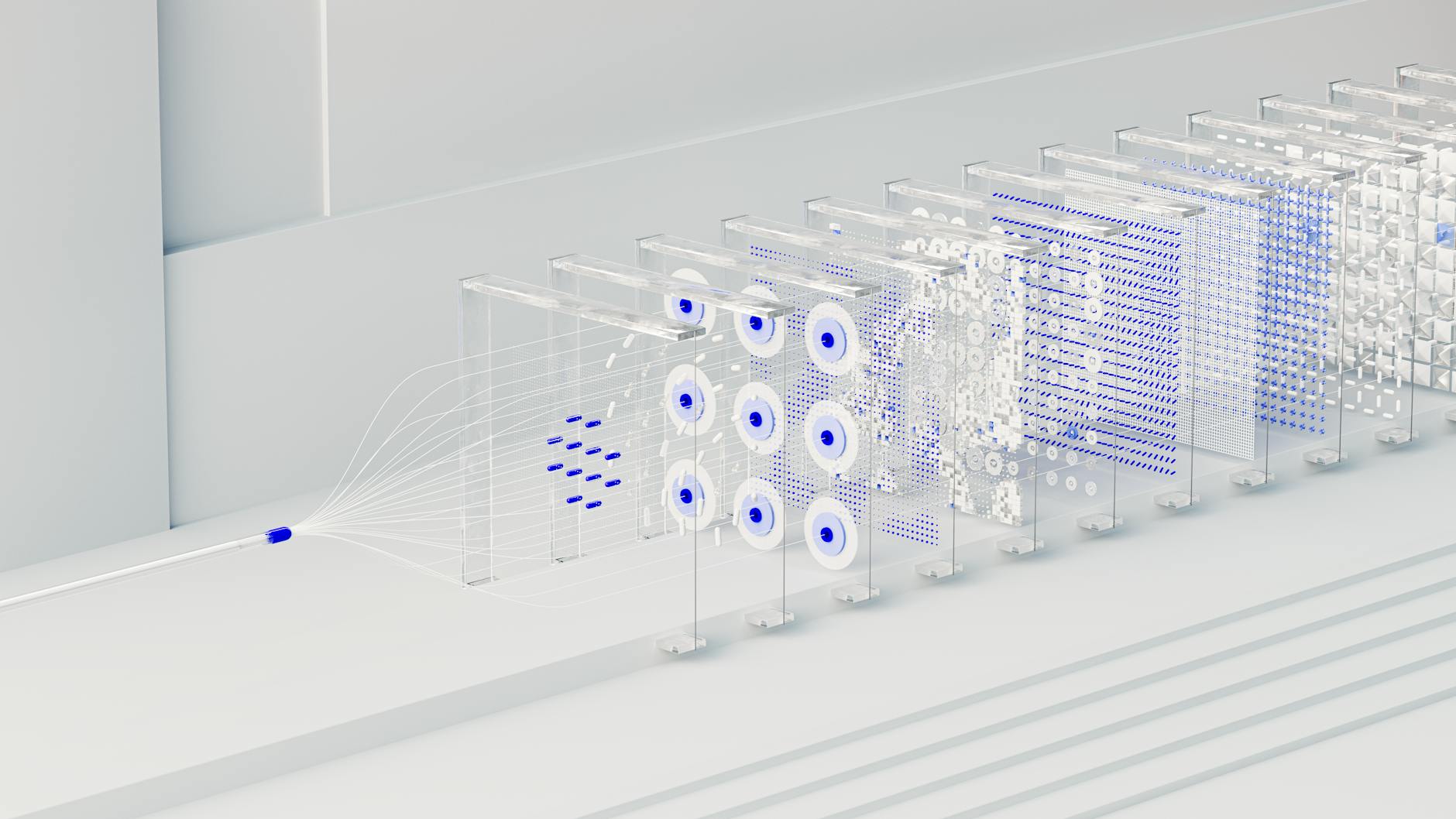
Photo by Google DeepMind via Pexels
Published on Alfo Tech Industries Blog · by Alfo Tech Industries · September 21, 2026
Forget trying to build the next ChatGPT. If you're a solo technical founder, that's a fool's errand. Your true superpower, your only path to outcompeting giants, lies in hyper-specialization. We're talking about architecting your niche AI assistant – a laser-focused tool designed to dominate a specific, often overlooked, problem space. This isn't just theory; it's the emerging battleground where small teams with deep domain knowledge beat generalist AI. The landscape of AI is shifting; monolithic models are losing their luster against bespoke solutions built for precision tasks. We'll cut through the hype and show you how to design and deploy a powerful Niche AI Assistant Architecture that delivers real value, all within the constraints of a single-person operation. This means moving beyond flashy demos to sustainable, cost-effective, and deeply integrated AI that actually works for a specific audience.
In this article:
- The Undeniable Power of Niche Specialization
- Forging Your AI's Brain: Structured Knowledge Bases
- Optimizing Your Niche AI Assistant Architecture for Lean Inference
- Designing Intuitive Interaction for Autonomous AI Agents
- RAG vs. Fine-tuning: A Complementary Edge, Not a War
The Undeniable Power of Niche Specialization
The biggest misconception in today’s AI gold rush is that bigger models always win. They don’t, especially not for solo founders. You can't outspend Google or OpenAI, but you can certainly out-specialize them. Generalist LLMs fumble hard when faced with highly specific, contextual problems. This is your opening. Your mission: identify a market segment with underserved, complex needs that current AI barely scratches. Think less “best vacuum cleaners,” more “quiet vacuum for apartment living.” That specific 'Problem + Context + Buyer' triad is gold, as maccelerator.la highlights. You can even leverage AI itself to brainstorm real buyer problems, filtering for commercially viable issues and content gaps. Don't be a generic model builder; be a 'model taker' — someone who builds a killer UI around existing models — or a 'model customizer,' injecting your unique data to refine what's already out there. Gartner predicts that 40% of enterprise applications will embed task-specific AI agents by 2026. This isn't just for big enterprises; it's a clear signal for specialized AI in every corner, including yours.
Forging Your AI's Brain: Structured Knowledge Bases
A specialized AI assistant is only as smart as its knowledge base. This isn't about feeding it Wikipedia. This is about curating a 'single source of truth' that is deeply structured for machines, not just humans. Retrieval-Augmented Generation (RAG) is your cornerstone here. It allows your AI to query an authoritative, external knowledge base at runtime, ensuring responses are accurate, current, and precisely tailored to your domain. This beats constant, costly model retraining any day. Think about it: your knowledge base needs to encapsulate decision frameworks, common client language patterns, step-by-step delivery sequences, and even precise objection responses. It's not just data; it's distilled operational intelligence. You'll federate structured data like databases with unstructured documents, chat logs, and internal playbooks. This machine-readable structure is what empowers your AI to reason effectively and outperform any generalist model on its home turf.
Optimizing Your Niche AI Assistant Architecture for Lean Inference
Listen up: throwing every query at a frontier model is an 'inference money pit.' Solo founders simply cannot afford it. This is where lean AI principles truly shine for your Niche AI Assistant Architecture. Small Language Models (SLMs) are your friends. They offer faster inference, dramatically lower computational costs, and often enhance privacy due to their localizability. Fine-tuning an SLM on your domain-specific dataset empowers it to specialize, frequently outperforming larger, generalist models for targeted tasks. Techniques like LoRA and QLoRA are game-changers, making fine-tuning far more memory and compute efficient. To avoid token burn and latency, you must systematically apply lean inference workflows. Right-size your models; don't use a 70B+ behemoth for simple classification when an 8B model will do. Implement semantic caching at the retrieval layer. Re-rank retrieved chunks before injection. And for goodness sake, provide only step-scoped context to reduce unnecessary token consumption. Every penny saved on inference is a penny in your pocket, not a cloud provider's.
Designing Intuitive Interaction for Autonomous AI Agents
Building an AI product isn't just about the backend; it's about the user experience. UX for AI agents is different, often profoundly. Traditional UI principles don't always translate. Your specialized AI needs to communicate clearly, naturally, and context-aware. If it’s performing autonomous actions, transparency becomes paramount. Users need to understand the AI’s reasoning, not just its output. Provide clear 'why' explanations. Offer user control, allowing overrides when necessary. Proactive status updates are essential; the AI should never just silently execute. And structured error recovery is non-negotiable. Clearly broadcast the use of AI from the start, setting appropriate expectations. Design goal-based user interfaces with explicit calls to action. Don't let your brilliant backend be hampered by a confusing front end. Iterate. Prototype. Get it into the hands of real users as fast as possible to refine those dialogue flows and preempt frustration. Trust is the currency of AI interaction, and good UX is how you earn it.
RAG vs. Fine-tuning: A Complementary Edge, Not a War
There’s often a debate: RAG or fine-tuning? The truth is, it's rarely an 'either/or' scenario, especially in a robust Niche AI Assistant Architecture. They serve distinct, yet complementary, purposes. RAG excels at injecting dynamic, current, and frequently updated external information without touching the core model parameters. If your domain knowledge changes rapidly or pulls from diverse external sources, RAG is your hero for real-time accuracy. Fine-tuning, conversely, alters the underlying model's behavior and knowledge patterns for a specific task. It deepens the model's understanding of domain-specific language, tone, and decision-making logic through targeted training data. For example, RAG provides the specific facts, while fine-tuning ensures the AI understands how a human expert would interpret and present those facts within your niche. The smart play is to consider how both can enhance your assistant. Don't fall into the trap of thinking one solution fits all; strategically combine them to build truly powerful specialized AI.
Conclusion
The future of AI for solo founders isn't about brute force; it's about surgical precision. By committing to a niche, meticulously structuring your knowledge, selecting lean models, and crafting user-centric interactions, you're not just building an AI assistant. You're forging a competitive advantage, a tool deeply embedded with domain expertise that generalist solutions simply cannot match. This approach minimizes costs, maximizes impact, and allows a single founder to achieve what once required an entire team. Stop chasing the impossible; start dominating the inevitable. Build your specialized AI, and own that corner of the world.
FAQs
How do I practically start identifying a niche for my AI assistant?
Begin by analyzing your own frustrations with existing tools or underserved communities you belong to. Focus on a clear "Problem + Context + Buyer" scenario, then validate the commercial viability by talking to potential users. Look for manual, repetitive tasks that domain experts currently perform.
What are the absolute minimum tools I need to start building a RAG pipeline?
You’ll need an embedding model (like those on Hugging Face), a vector database (e.g., Pinecone, Qdrant, or even a local FAISS index), and an orchestration framework like LangChain or LlamaIndex to connect your LLM to your knowledge store. Cloud providers often offer managed RAG services, simplifying initial setup.
Is it really cheaper to use smaller models and fine-tune them compared to a large frontier model?
In many niche scenarios, yes, significantly so. Smaller models incur dramatically lower inference costs and latency, crucial for sustainability. Fine-tuning allows these smaller, leaner models to achieve superior, focused performance on specific tasks, making them a far more cost-effective choice than a generic large model for a specialized application.
How do I ensure my specialized AI assistant provides accurate information?
Accuracy hinges on the quality of your curated knowledge base and the effectiveness of your RAG pipeline. Ensure data is current, chunks are well-formed, and retrieval is precise. Implement confidence scoring and, where feasible, human-in-the-loop validation for critical responses; transparency about information sources also builds user trust.
Sources & Further Reading
- premai.io
- maccelerator.la
- solutionsreview.com
- nxcode.io
- forbes.com
- theentrepreneur.studio
- entrepreneur.com
- medium.com
- fuselabcreative.com
- aiexpert.network
- b-eye.com
- articleflow.io
- medium.com
- stanford.edu
- truefoundry.com
- databricks.com
- galileo.ai
- amazon.com
- scality.com
- medium.com
- kuse.ai
- slack.com
- theorchestrators.ai
- omdena.com
- arxiv.org
- turing.ac.uk
- youtube.com
- digitaldividedata.com
- neurometric.ai
- medium.com
- telusdigital.com
Alfo Tech Industries Blog — Alfo Tech Industries Blog is published by Alfo Tech Industries, an AI‑native, founder‑focused product ecosystem building automation, AI tooling, and technical systems for independent creators and small teams.

Comments
Post a Comment