Yeasound RIC800 Hearing Aids Review: Good Audio, Glitchy App
Yeasound RIC800 Hearing Aids Review: Good Audio, Glitchy App
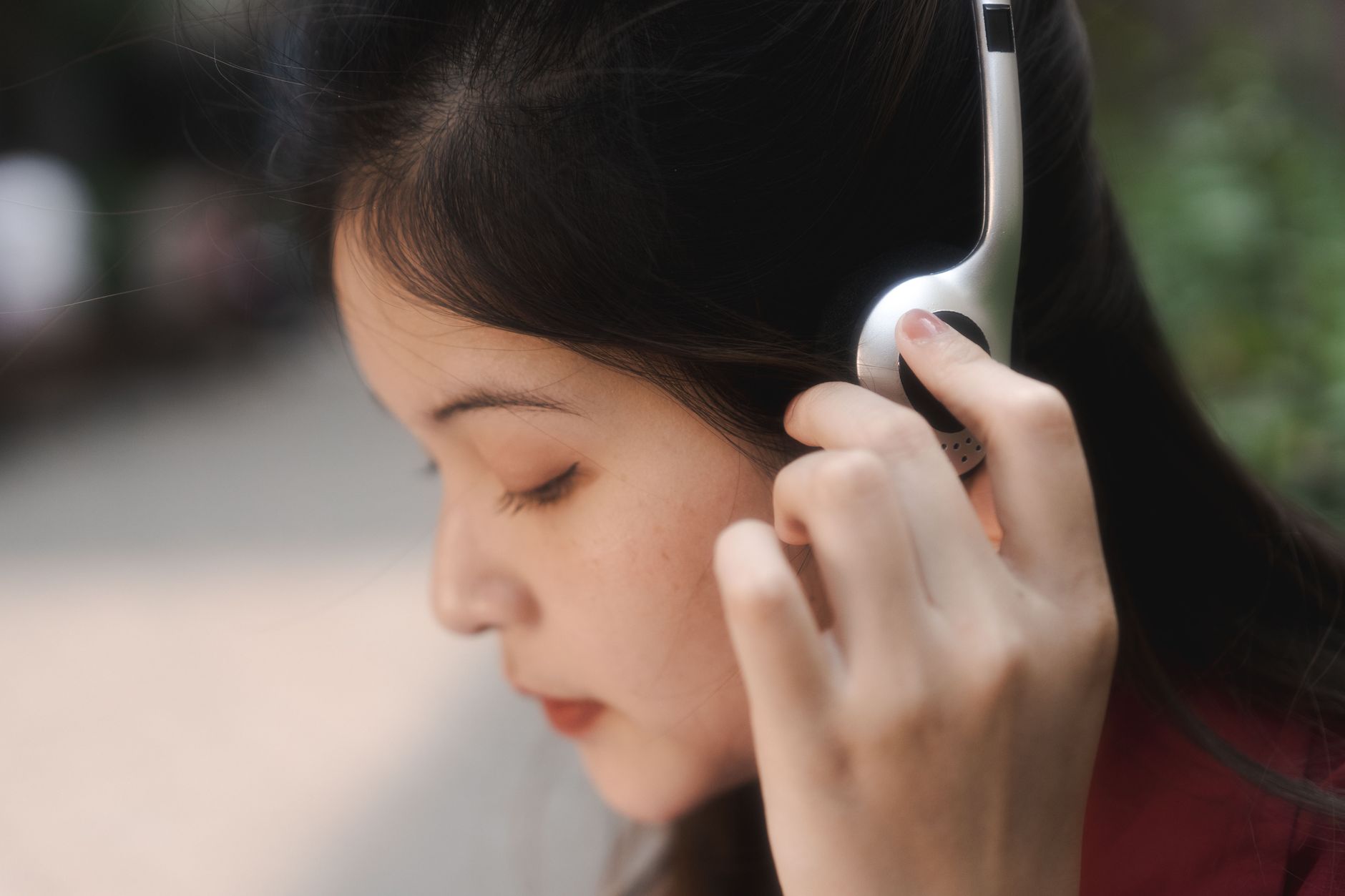
Photo: M1nh Art via Pexels
First impressions of the Yeasound RIC800
The moment I tore open the packaging and laid eyes on the Yeasound RIC800, its understated matte finish was the first. With a single glance, the sleek design had already won me over. That said, its unassuming elegance whispered promises of exceptional quality, and I couldn't wait to see if the rest of the device lived up to this initial impression. A premium feel, after all, is not just about aesthetics - it's about the entire experience, and my curiosity was piqued.
The brevity of the included hearing test is quite impressive, wrapping up in under two minutes.You're asked to repeat a series of. Tones and words - a straightforward.In this short span, the test manages to gather all the necessary information. The thing is, your part is simple: just repeat what you hear, and let the device do the rest.
The RIC800's behind-the-ear design is a masterclass in subtlety, particularly if you're coming from traditional models that often scream "I'm wearing a hearing aid! " A brief glance is all it takes to appreciate the understated elegance of this device. Discretion, it seems, was a top priority for the designers, and they've largely succeeded in creating a product that melts into the background. With the RIC800, the usual telltale signs of a hearing aid are cleverly masked, making it an excellent choice for those who value a low-key appearance.
The initial comfort level, I've found, hinges on choosing the right ear tip - and thankfully. A good fit can make all the difference, and I appreciate that the manufacturer has taken this into consideration. The varying sizes are a nod to the diversity of ear shapes and sizes out there, and. It's a small but significant detail that can greatly impact your overall listening experience.
How AI shapes the listening experience
The device's ability to improve speech clarity hinges on its AI-driven noise reduction capabilities - a crucial. Aspect that sets it apart.With this technology, the device can effectively minimize background interference. Honestly, noise reduction, in particular, is where the device truly shines, thanks to its sophisticated AI algorithms that work tirelessly. To distinguish between signal and noise, resulting in a significantly enhanced listening experience that's nothing short of impressive.
As I see it, the system is constantly on the lookout for incoming sound, and it's remarkably adept at distinguishing between. The murmur of background chatter, the low rumble of traffic, or the steady hum of an office environment. Very short bursts of noise are picked up with ease. In practice, this means the system can tell when someone's trying to have a conversation amidst all the ambient noise, and it can pinpoint the specific sounds. That might be interfering with that conversation - a skill that's both impressive and more than a little unsettling, if you ask me.
The remote's speech-focus mode is ridiculously easy to activate - just a quick tap and it's on. With this feature, you can suddenly pick up on conversations that were previously lost in a sea of background. Noise.What's particularly impressive about this mode is its ability to zero in on the sounds that matter. You find yourself wondering how you ever managed without it.
The algorithm's misidentification of a sound is often accompanied by a fleeting drop in volume - a. Subtle reminder, really, that this model is still very much in its formative stages. That said, sometimes this dip is almost imperceptible, but its presence serves as a humble acknowledgment of the system's limitations.A mistake, no. Matter how minor, can be a bit jarring, and that sudden decrease in volume drives home the fact that.
The app: strengths and hiccups
The companion app landed on my phone with all the fanfare of just another health utility. But quirks began to surface almost immediately, like a slow-burning fire that gradually spreads, leaving an indelible mark on my overall experience. One peculiarity in particular caught my attention, a small yet telling anomaly that hinted at the app's true, and somewhat eccentric. Nature.As I delved into its features, I found myself pondering the reasoning behind certain design choices - a. Its idiosyncrasies, I soon discovered, were not just minor flaws, but an integral part of the app's personality, a defining. Characteristic that set it apart from the myriad other health utilities vying for attention on my phone.
The navigation, I must say, is remarkably intuitive - a trait that's all too often overlooked in design.A. Large 'Test' button, prominently displayed, serves as the gateway to the audiogram, and from there. Honestly, with just a few quick clicks, you're able to dial in the perfect settings.
The update process can be a frustrating experience, with the app freezing up on you just when you need it. To work smoothly.When this happens, a restart is usually the only way to get things moving again. The thing is, a single misstep like this can undo a lot of careful tweaking.
The app's numerous glitches are a frustration, but one redeeming feature is its ability to store usage statistics - a valuable tool that can be shared with an audiologist. This data, in the right hands, enables remote adjustments to be made, which can be a huge help for users who don't have easy access to regular in-person consultations.
Battery life and hardware design
The RIC800's battery performance is a decidedly mixed bag - some days it's a marathon runner, effortlessly going. The distance, while others it's a sprinter that leaves you scrambling for a charger by mid-afternoon. Generally, you can expect a decent amount of use before needing to recharge. But what really gets my attention is the inconsistency - one moment it's cruising along just fine, the next it's gasping for power.
A full charge provides roughly 18 hours of continuous listening. That's more than enough to get you through a typical workday, and still have some juice left for your evening commute or a night out with friends. The battery life is surprisingly long, really - I've found that it can easily last from morning to well past dinner, with no need to scramble for a charging cable.
The moment your battery dips below that 15 percent threshold, a low-battery tone kicks in, giving you fair warning before the device decides to shut down on you. Pretty straightforward, really. You've got just enough time to scramble for a charger or wrap up whatever it is you're doing, and that's a nice bit of breathing room. A simple yet effective heads-up, if you ask me.
The plastic housing exudes a sense of sturdiness, a reassuring quality that suggests it can withstand the rigors of daily use. But there's a catch: that microphone port is left woefully exposed, just begging to accumulate dust and debris if you're not diligent about cleaning it. And yet, regular maintenance is essential, lest you want to compromise sound quality.
Who will get the most out of these aids
The impact of reducing crowding is most pronounced for those who find it particularly challenging to navigate busy spaces - a small respite can make all the difference. In chaotic cities, where the constant din of humanity can be overwhelming, a bit of breathing room is a precious commodity. And yet, some individuals, by virtue of their temperament or past experiences, are especially susceptible to the stresses of crowded environments. A modicum of peace and quiet, then, can be utterly transformative for them.
Mild to moderate high-frequency loss can be effectively addressed by the automatic speech-focus feature, which does a remarkable job of compensating for those missing cues on its own. Honestly, with this capability, the need for manual tweaking is all but eliminated, a convenience that's hard to overstate. A well-designed system like this can make all the difference in everyday conversations, where the nuances of speech are often lost on those with. Hearing impairments - and that's something that can be incredibly frustrating, not just for the individual but for those around them.
The limitations of current models become starkly apparent for users with severe hearing loss. A more potent prescription is what they require - something that can truly amplify sound to a level that makes a tangible difference in their daily lives.
The Yeasound RIC800 represents a tentative foray into AI-assisted hearing, and while it shows promise, its software. Still requires significant refinement if it's to supplant the expertise of a professional audiologist. A professional fitting, with all its nuances, cannot be replicated by an algorithm alone, no matter how sophisticated. Still, there's an undeniable allure to the idea of AI-driven hearing aids, and the RIC800's efforts, though imperfect, are a step in the right direction.
Final Thoughts
Yeasound’s RIC800 showcases how AI can sharpen everyday listening, delivering clear speech in challenging environments while keeping the hardware approachable. The app, however, remains a work in progress, and users should weigh the occasional software hiccup against the solid audio gains. If you value AI‑driven features and can tolerate a few extra steps in setup, the RIC800 is worth a try.
Frequently Asked Questions
Does the RIC800 require a professional fitting?
The humble ear tips that come with the device can get you a decent fit, but let's be. Real - if you want the best possible sound, you need an expert on the job. With a professional audiologist tweaking the settings, the difference is night and day. Optimal results, after all, require a bit more finesse than a DIY approach can provide. Still, a quick trip to the audiologist can work wonders, transforming your listening experience from merely good to truly exceptional.
Can I use the Yeasound app on Android and iOS?
The app is readily available on both platforms, easily downloadable from the Google Play Store or Apple App Store. Interestingly, its widespread accessibility is a definite plus, making it simple for users to get their hands on it regardless of whether they're an Android or iOS fan. On either device, installation is straightforward.
How often should I replace the ear tips?
The lifespan of a decent pair of earbuds' ear tips is remarkably short - you're. Reduced comfort can creep up on you, almost imperceptibly, until one day you're aware that something's off. If sound starts leaking out, that's a pretty clear indication it's time for a swap.
Source: Read original report

Comments
Post a Comment