Why OpenAI, SpaceX and Others Are Building Their Own AI Chips
Why OpenAI, SpaceX and Others Are Building Their Own AI Chips
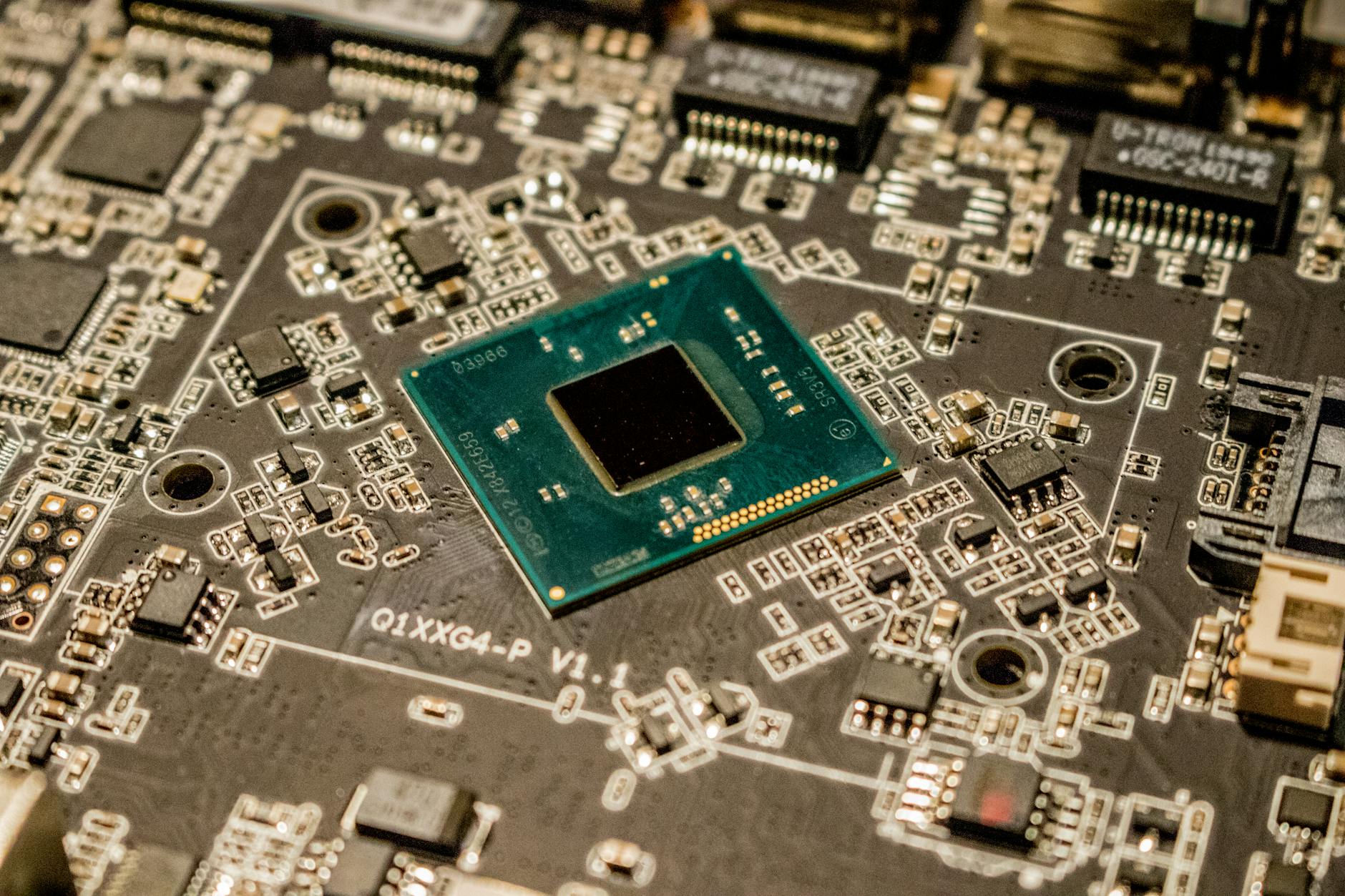
Photo: Jeremy Waterhouse via Pexels
The warning signs of a single‑supplier strategy
Nvidia's introduction of the A100 was met with unbridled enthusiasm from the AI community.This accelerator was a. Beast, promising unparalleled throughput for both training and inference - a tantalizing prospect for startups. To be fair, in the years that followed, this promise held sway, becoming the de facto standard by which all else was measured: models were meticulously tuned to run on CUDA, and research papers dutifully quoted TFLOPs measured on Nvidia's silicon, a. Testament to the company's dominance.But beneath the surface, a more insidious dynamic was at play - the convenience afforded by Nvidia's architecture created a self-reinforcing feedback loop that effectively locked the market into a single.
The dominance that was once a comforting safety net has become a stifling constraint.In the blink of an eye. Supply chain disruptions in Taiwan or sudden surges in demand can send shockwaves through the industry. To be fair, a single fab shutdown can have catastrophic consequences, bringing an entire generation of workloads to a grinding halt - a risk that's now all too real, having evolved from a distant theoretical concern to. A pressing operational issue, prompting many companies to launch their own internal chip projects in a bid for greater control.And this shift is a stark reminder that even the most seemingly stable.
What OpenAI’s Jalapeño chip actually does
OpenAI's engineering team has dubbed their new silicon the Jalapeño, a nod to the kick it brings to inference latency. This chip isn't designed to tackle the behemoths of training, instead zeroing in on the specific computations that drive ChatGPT-style models as they field. Millions of queries every second.A 15% reduction in per-token cost is claimed, compared to the same model running on an A100. The Jalapeño moniker also hints at a broader shift within OpenAI - they're clearly no longer satisfied with. Being just a software outfit, a change that could have significant implications for their future direction. And at its core, this move signals a willingness to get their hands dirty, to experiment with hardware in a way that was previously unheard of at the company.
The collaboration with Broadcom has yielded a design that substitutes some of the matrix-multiply units with a more efficient memory hierarchy.This tweak allows the chip to stash weights in closer proximity to the compute engine, courtesy of Broadcom's. Know-how in high-bandwidth interconnects - a.When you look at the early benchmarks OpenAI has shared, one thing stands out: this chip can handle a significantly higher token throughput without breaking a sweat. A more predictable cost model is what this ultimately means for the massive inference fleets that keep services like. This one running smoothly - and that's no small thing, considering the sheer scale of these operations.
Why the likes of SpaceX can’t wait for a price drop
The meticulous training of neural networks at SpaceX is a marvel, as they're able to predict those pesky rocket thrust. Anomalies with remarkable accuracy - every millisecond saved, after all, means a tangible reduction in fuel consumption. Daily simulations number in the thousands, a staggering volume that necessitates a substantial investment in computational power.Nvidia's pricing fluctuations can have a profound impact on launch budgets. And yet, a brief pause to consider the economics is warranted: when the cost of computing surges, it's not just a minor adjustment - the effects are far-reaching. And then there's the added complexity of data latency, as information winds its way from satellite-ground stations to cloud-based GPUs, introducing yet another variable to contend with.
When a company like SpaceX fabricates its own chip in-house, the benefits are substantial. Tuning the silicon to its specific data pipeline allows it to sidestep the generic kernels that Nvidia ships, which may not be optimized for its unique needs. A custom design means the floating-point unit can be trimmed to precisely match the requirements of SpaceX's. Models, many of which operate at reduced bit-widths, which in turn significantly reduces power draw. The thing is, the end result is a dramatic increase in the number of accelerators that can be packed into a. Single board - a critical consideration for edge deployments on rockets, where space and power are severely limited.
The broader market ripple
The specter of a supply squeeze has finally begun to sink in with investors, and the effects are already visible in recent funding. Rounds.Short and sweet: money that once flowed freely to Nvidia-centric startups is now being funneled towards hardware teams that. As the market's priorities undergo a significant shift, the conversation has evolved dramatically: these days, it's no longer just about who's packing the most. Powerful GPU, but about who can guarantee a reliable flow of silicon - a far more nuanced and complex consideration. Valuations are already starting to reflect this new reality, and I expect we'll see even more pronounced changes in the coming months as this trend continues to gather momentum.
The prospect of multiple players entering the fray could very well splinter the landscape into a multitude of specialized offerings, each finely tuned for a specific workload. Complexity will undoubtedly rise, as developers are forced to navigate a dizzying array of options. But in the midst of this chaos, something interesting may emerge: a revival of heterogeneous compute, where clever orchestration software steps in to dictate which chip. Handles which layer of a model - a nod to the past, perhaps, but one that could pay dividends in the long run. And what's the potential payoff for all this added intricacy? That said, a significant reduction in the systemic risk that has been the industry's constant companion since the. First AI boom, a nagging concern that has held back innovation for far too long.
Final Thoughts
The shift towards in-house AI silicon has little to do with one-upmanship between brands. What's really driving this trend is the need to safeguard the compute pipeline - the backbone of tomorrow's products. When you look at the likes of OpenAI, SpaceX, and Apple, it's clear that custom chips can yield some very. Real benefits.A more diversified hardware ecosystem is likely on the horizon, with Nvidia still holding significant sway.
Frequently Asked Questions
Why are companies investing in custom AI chips instead of buying Nvidia GPUs?
The ability to craft custom silicon is a powerful tool, allowing companies to finely tune their operations and dictate the terms of their technology investments. With this approach, cost, performance, and supply all fall under their purview. Tied to no one vendor's whims, they're free to create systems that perfectly mirror the unique contours of their workloads, unencumbered by the limitations imposed by off-the-shelf solutions. The thing is, this level of autonomy is invaluable.
What advantages does a custom inference chip provide for large language models?
The beauty of optimization lies in its ability to trim the fat, so to speak, shrinking the memory-traffic path to a fraction of its former self. The thing is, when you consider the impact of dropping unused precision, the benefits become clear. Still, a few tweaks here, a handful of clever adjustments there, and suddenly the most common attention kernels are executing at breathtaking speeds. - all of which, of course, directly reduces latency per token, a crucial factor in any number of applications. Latency, that perennial thorn in the side of developers everywhere, is slowly but surely becoming a thing of the past.
Will Nvidia lose its market share completely?
The notion that Nvidia's dominance will evaporate overnight is simply unrealistic. Nvidia still holds a significant edge when it comes to training performance - and let's be honest, that's what. Truly matters in this space.But amidst all the fanfare, a quiet revolution is unfolding: bespoke chips. A small, yet significant, segment of the market is ripe for the taking, and these custom solutions will undoubtedly carve out a niche for themselves. Nvidia's ecosystem tools remain unparalleled, a testament to the company's foresight and investment, yet the rise of these specialized chips signals a shift towards greater diversity in the industry.
Source: Read original report

Comments
Post a Comment