Why agents forget and how hypernetworks might fix it
Why agents forget and how hypernetworks might fix it
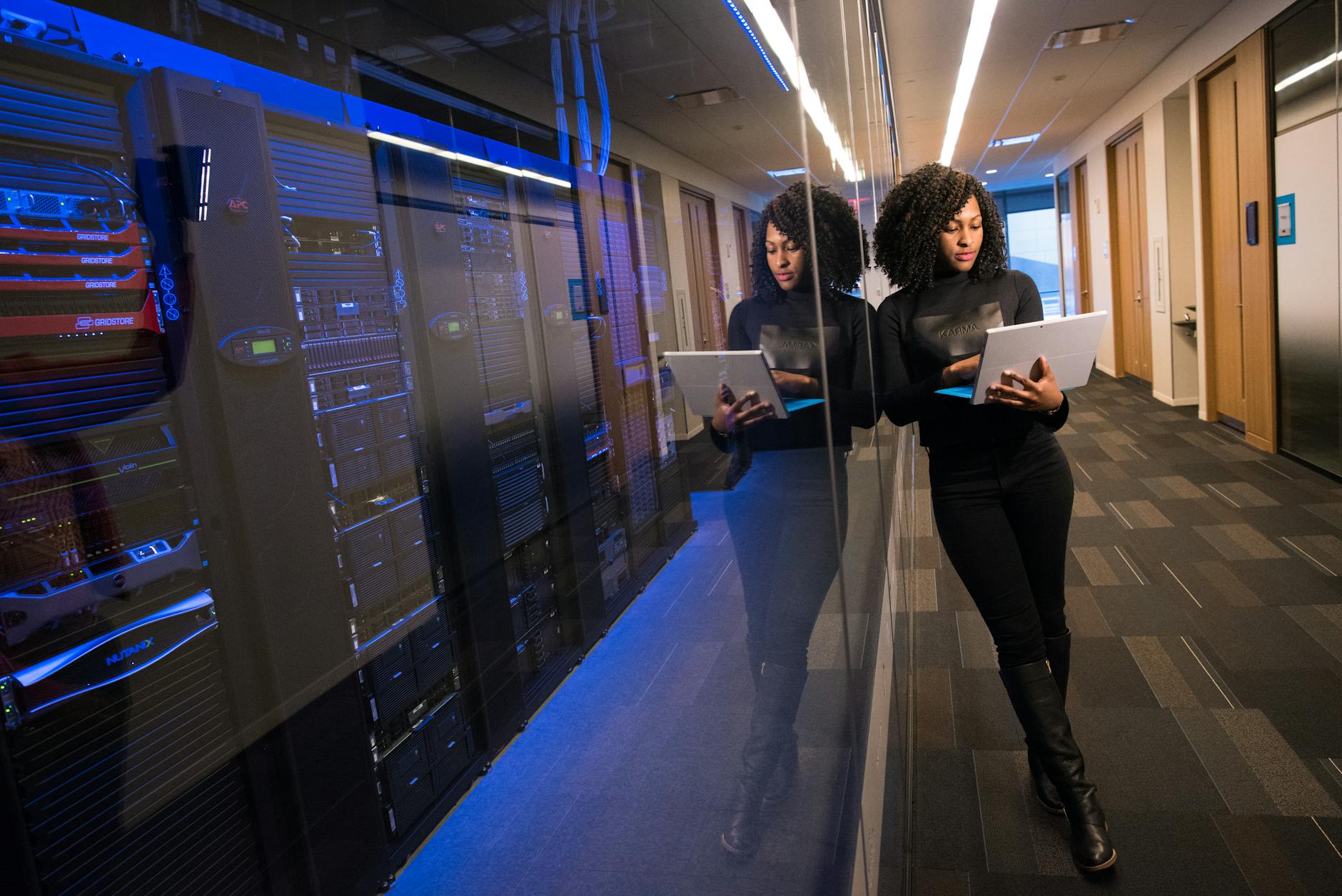
Photo by Christina Morillo on Pexels
Why fine‑tuning forgets and what that does to production agents
Teams launching LLM-driven agents often encounter a surprise. Context falls apart fast. This happens after just minutes of a demo. Then the model starts to stray, hallucinating or repeating old output, which can be frustrating. Short demos mask this issue. But the problem persists, revealing the model's limitations.
The root of that evaporation lies in fine-tuning. We teach models to compress patterns. During training, a static dataset is used, and the model learns to update its weights. The thing is, this process seems straightforward. Interestingly, but, when deployed, the model only sees the prompt, and any unused information disappears quickly. To be fair, once the token window slides, it's gone. An agent that answered a ticket correctly at step three will forget the details by step ten. You must keep re-injecting the information to prevent this. Forgetting happens fast. The model's memory is short-lived, and that's a problem. Unless you continuously provide context, the agent will lose track of the ticket details.
Fine-tuning is all about prediction. The model learns to predict the next token given a fixed window, which is essentially its sole focus. This process is straightforward. The fixed window provides context, helping the model make predictions. Context matters. With each prediction, the model improves its understanding of language patterns.
RAG's supposed to keep memories fresh. But it leaks. Interestingly, the retriever fetches documents on demand, yet its selection logic can be a mystery, often overlooking critical clauses. This is a problem. Which means, when a retrieved snippet overlaps with the prompt, the language model may end up overwriting earlier context instead of building upon it. That creates a frustrating loop. The agent asks for confirmation on something it already knows, requiring human intervention to break the cycle.
Teams often miss this: a fine-tuned model and a noisy retriever are a toxic combo. At the same time, forgetting happens. A model that's already prone to forgetting will rely even more heavily on the retriever. This creates a vicious cycle. The retriever's noise amplifies the forgetting, and suddenly your elegant demo requires constant supervision. Babysitting, really. What was meant to be a sleek solution becomes a time-sucking overhead.
Hypernetworks as on‑demand model builders
Hypernetworks are small.They generate weight adjustments for a larger backbone model at inference time. Still, this approach keeps the backbone relatively unchanged. You fine-tune, but don't overhaul it. Task-specific tweaks get injected by the hypernetwork whenever necessary, allowing the larger model to adapt without being completely retrained. To be fair, that's the key benefit.
The forgetting equation gets a major overhaul. Generic backbone, original context window intact. Hypernetwork fills in the gaps for the current task. This approach computes adjustments on the fly, avoiding that static-window trap classic fine-tuning often falls into. Honestly, fresh computations for each request make all the difference. No more static windows. The hypernetwork's dynamic adjustments ensure the model stays flexible and effective.
A recent internal test yielded surprising results. We swapped out a 6‑B fine‑tuned agent. For a hypernetwork‑augmented version, that is. Which means, this was on a ticket‑routing workflow, specifically. The outcome was notable: the hypernetwork‑driven agent completed the batch with half the human interventions required. That's a significant reduction. The hypernetwork made a big difference, apparently.
Improvement isn't magic. Interestingly, decoupling knowledge storage from knowledge application is key.This process allows the retriever to feed documents while the hypernetwork determines what content overwrites existing prompt tokens. Redundant text gets ignored. The hypernetwork preserves original context, preventing information leaks.
Adoption takes time. A hypernetwork requires an additional training loop. Interestingly, this adds complexity. You need a solid inference pipeline to execute two models quickly. Interestingly, latency budgets are a concern. But for long-running jobs, supervision costs are the real burden. The trade-off is worth it.
Frequently Asked Questions
Why do LLM agents need human supervision after a short run?
The model's context window has a major flaw. Older information gets pushed out. In many cases, this leads to problems. The retriever often feeds it irrelevant snippets. That's when things go wrong. A human has to step in and correct the agent's stale or contradictory output. The thing is, this process is tedious and necessary.
💡 Expert Tip: Test a hypernetwork-augmented agent. At the same time, log the delta between backbone logits and hypernetwork-adjusted logits. This delta magnitude often predicts when human rescue is needed. Honestly, backbone logits can be quite different from hypernetwork-adjusted ones, and that discrepancy is crucial. A large delta usually indicates the agent is struggling. Monitor this delta closely to anticipate when intervention is necessary, as it can be a key indicator of the agent's performance and potential need for human rescue in hypernetwork-augmented systems.
Final Thoughts
Pilots stall due to static fine-tuning and dynamic retrieval tension. The conflict is real. Hypernetworks offer a potential solution, a middle ground where models remain lean and adaptable. That said, this balance is crucial for long-term efficiency. Still, if overhead costs decrease, next-gen agents might just become autonomous, running jobs without constant human supervision, which. Would be a significant step forward for AI development and the field of machine learning. Still, done right, this could change everything.

Comments
Post a Comment