Self‑Harness lets AI agents rewrite their own rules – up to 60% faster
Self‑Harness lets AI agents rewrite their own rules – up to 60% faster
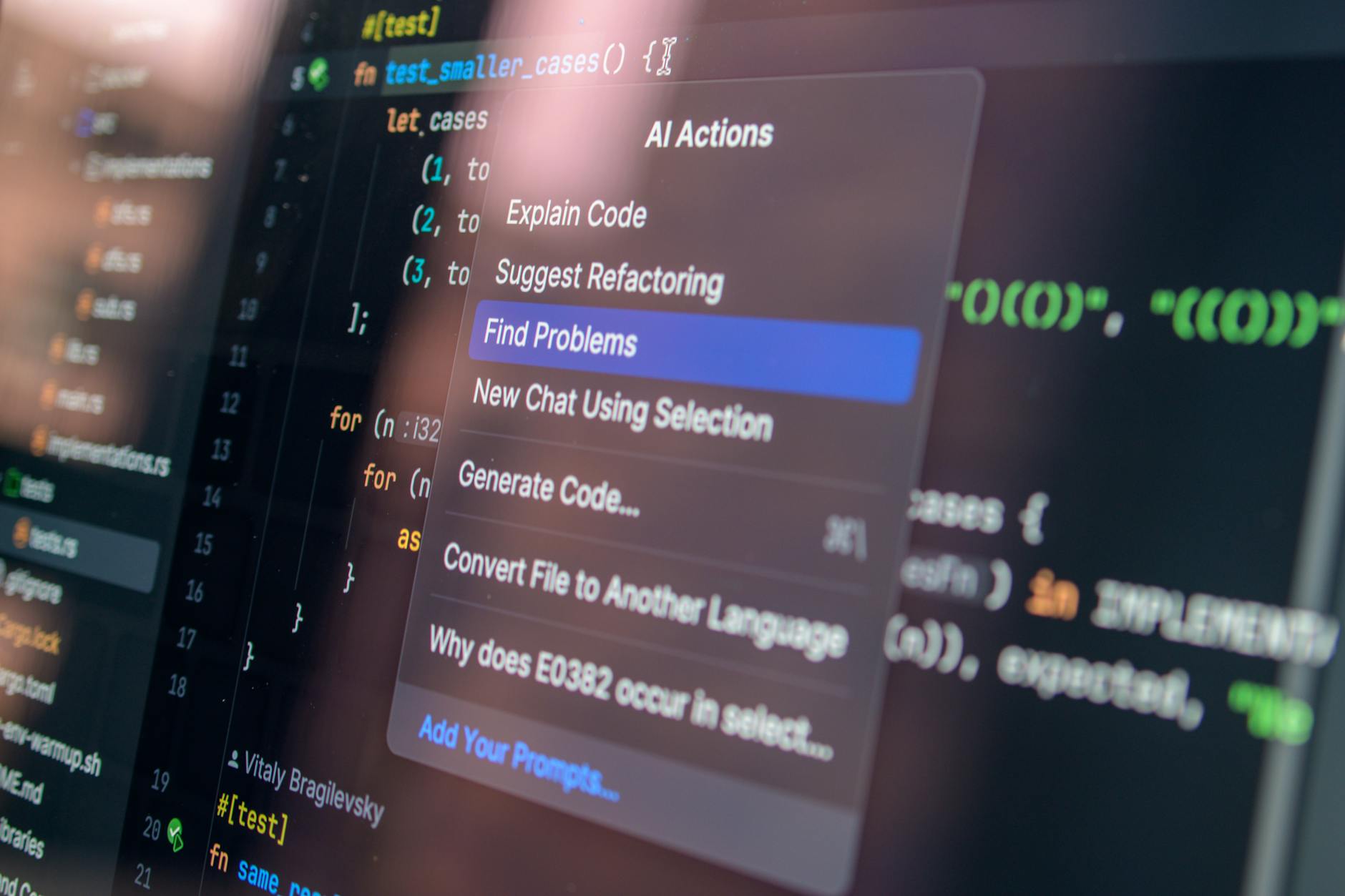
Photo by Daniil Komov on Pexels
Why the harness matters more than the model itself
Watching engineers tackle a new LLM is fascinating. Drama unfolds elsewhere. Not in model weights, but in the harness. To be fair, this component decides when to call the model, sets the temperature, and parses output. A delicate balance. The harness holds significant power, controlling the entire process.
A week was all it took. Last quarter, I witnessed a startup ditch their hard-coded prompt chain for a tiny rule engine. Which means, the impact was huge: missed deadlines became a thing of the past. They started shipping nightly builds. Pretty impressive, if you ask me. At the same time, the switch was tiny, but the results were significant. Nightly builds became the new norm.
Enterprises often view this harness as a mystery. They tinker with thresholds manually. This approach is flawed. Most just cross their fingers, hoping the next model release will magically work as intended, with all the complexities of machine learning and predictive analytics somehow sorted out. Not a good strategy.
Manual debugging falls short. The model evolves weekly, rendering old intuition useless. New token distributions emerge, leaving our understanding in the dust. This approach is a dead end.
Self-Harness creates a loop. The agent observes its own success metrics, which sparks a proposal for a rule change. To be fair, validated on a sandbox. Honestly, then, if stats check out, the change goes live.This process is key to adaptive systems, where agents learn from their own metrics and adjust accordingly. The thing is, done right, this loop can significantly improve an agent's effectiveness.
Self‑Harness in practice: what the experiments show
Researchers put three benchmarks to the test. A customer-support bot, code-review assistant, and data-extraction pipeline were used. Each was run with and without the self-modifying harness. This allowed for a comparison of performance. Which means, the results will show how the harness impacts these tools. Self-modifying code can be tricky. Interestingly, but the data-extraction pipeline is a great test case. Results will vary, but the code-review assistant is a key area of interest. The customer-support bot is another story. With and without the harness, performance differences will be telling.
Support scenarios are tricky. The agent adjusted its confidence threshold for FAQ matches. A 15% drop in hand-off rate triggered this change. That's a significant shift. Still, the agent learned to be less confident, actually, after seeing this notable decline. Now it's more willing to pass on uncertain matches.
Code-review bots can be finicky. A bot was stuck at 45% suggestion acceptance. Then it rewrote its rule, asking for more context before flagging a line. Which means, that simple tweak boosted acceptance to 68%. Works better now.
The extraction pipeline saw a significant reduction. End-to-end latency dropped by about a third.This happened because the harness figured out how to batch requests in a smarter way. Latency decreased. The harness learned quickly. Batching requests more intelligently was key to this improvement.
A significant boost. The reported 60% performance jump resulted from improvements in two key areas: faster convergence and a reduced need for human intervention, specifically fewer human-in-the-loop corrections. This change is substantial. Faster convergence means less time spent on training, which is a major advantage. Fewer corrections also indicate higher accuracy.
The modest hardware footprint caught me off guard. Self-modifying code, I thought, would require serious firepower. Still, not so - a lightweight Python service does the trick. No extra GPUs are needed, which is a huge plus.
Frequently Asked Questions
How does Self‑Harness differ from traditional prompt engineering?
Self-Harness gives the rule set a lot of flexibility. The agent can tweak and test changes on its own. Prompt engineering, by contrast, is pretty rigid. You craft a prompt, and then you're stuck with it, hoping it still works when things change. No updates, no tweaks - that's just how it is. This difference matters, especially when you're working with dynamic systems and need to adapt quickly. That said, the static approach of prompt engineering can be limiting. Change happens.
Can Self‑Harness be applied to closed‑source LLM APIs?
As long as the API provides sufficient control, like temperature and max tokens. That's key. The framework remains client-side, giving you control over post-processing steps and other adjustments.
💡 Expert Tip: You're already logging per-call latency and success rates. To be fair, feed those into Self-Harness's evaluation sandbox. This framework can surface some really useful rule tweaks. The thing is, you'd never think to try them manually, which is kind of the point. The thing is, the evaluation sandbox does the heavy lifting, suggesting changes that might not be immediately obvious. Per-call latency and success rates are just the beginning - with the right framework, you can optimize your entire system. Try it.
Final Thoughts
Self-Harness turns AI agent development on its head. Interestingly, engineers no longer chase a moving target. Interestingly, agents learn, adapt, and pursue their own objectives. This shift raises an intriguing question: will we soon see a diverse marketplace emerge, featuring self-generated harnesses tailored to specific workflows and niche applications? Interestingly, yes, that's the next big thing. Specialized harnesses could revolutionize various industries, from healthcare to finance, by streamlining unique processes.

Comments
Post a Comment